Like Grandma Made, a cookbook of my grandmother’s recipes
A printed cookbook of my grandmother’s recipes, designed to feel like sitting at her table, with the stories that made each dish hers.
My grandmother, Ruth Lavon Craycraft, was happiest with plates to set and people to welcome. Her table was always beautiful. The placemats were straight, the napkins were folded just so, and the chairs sat exactly two inches from the table. When I was small I told her she was the best cook this side of the Mississippi. She would giggle and brush it off.
She never wrote a cookbook. She kept recipe cards taped to the inside of her kitchen cabinets, cards she didn’t need to read but kept anyway. Those cards, and what my family remembered about how she used them, became Like Grandma Made.
A list of ingredients wasn’t the point. I wanted a book that felt like sitting at her table, so that anyone in the family could open it and cook something the way she did.
A recipe is really a person
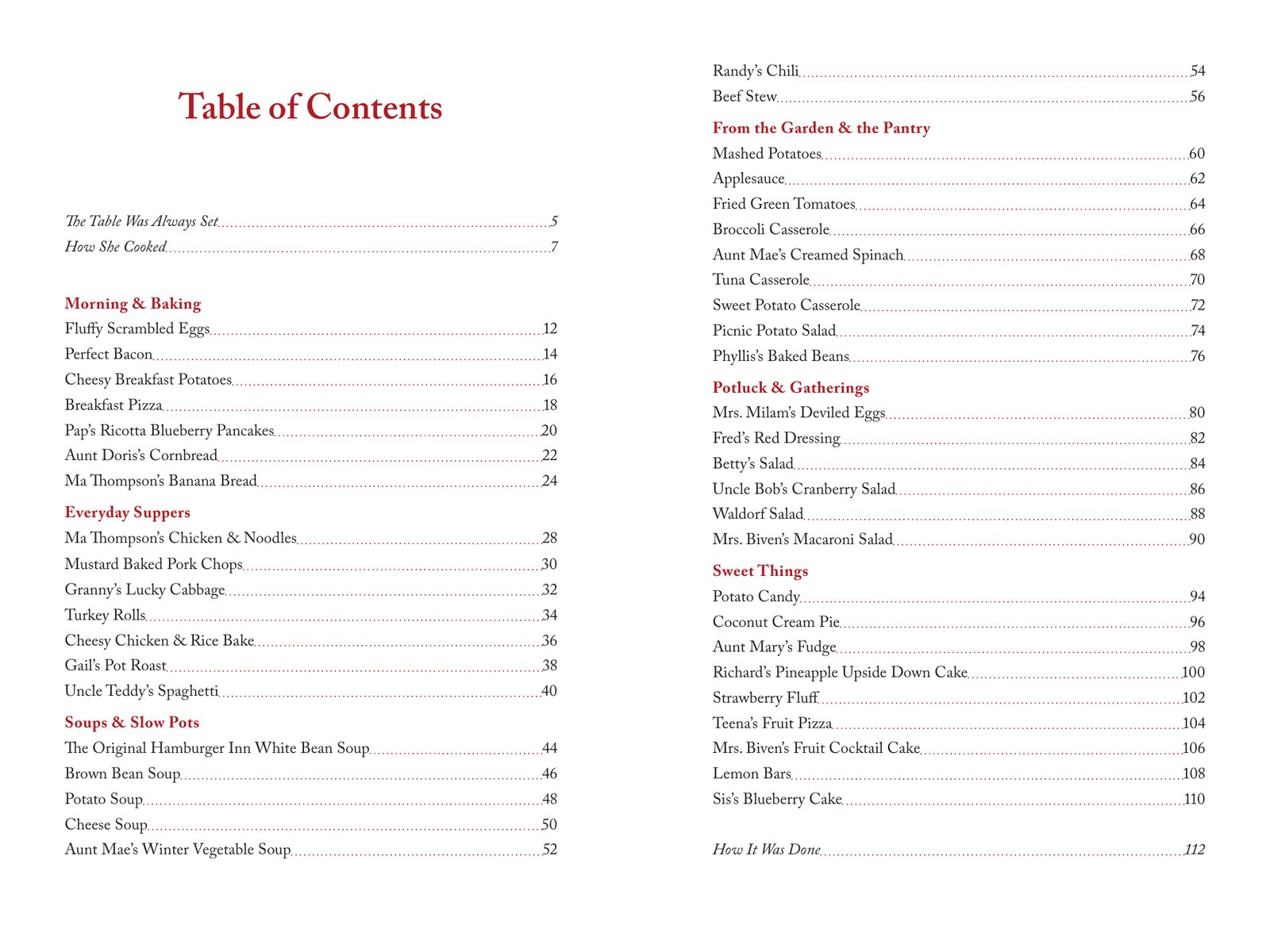
Look at the table of contents and you meet half of her world. Aunt Doris’s Cornbread. Ma Thompson’s Chicken & Noodles. Pap’s Ricotta Blueberry Pancakes. Uncle Teddy’s Spaghetti. Mrs. Milam’s Deviled Eggs. Fred’s Red Dressing. She swapped recipes with her sisters, clipped them from newspapers, and collected them from church kitchens and the women at the golf course. What made them hers was how she made them and who she made them for.
So I kept the names. A recipe titled with a person tells you where it came from before you read a word of it.
The notes hold the stories
Every recipe ends with a short note, set in a dotted box like something tucked into a recipe card. That’s where her habits live, the things no recipe card ever said.
When she cooked eggs for kids, she stirred in a few chunks of Velveeta. On New Year’s Day she hid a clean dime in the cabbage for one lucky person to find. Fred’s, one of her favorite local spots, eventually sold its salad dressing at Kroger, and she still made her own. The white bean soup came from her close friend Ruth Davis, who worked at the Hamburger Inn, where my grandparents liked to have lunch. Cheese soup was what she made when I wasn’t feeling well. And the chili was the dish she liked me to make for her.
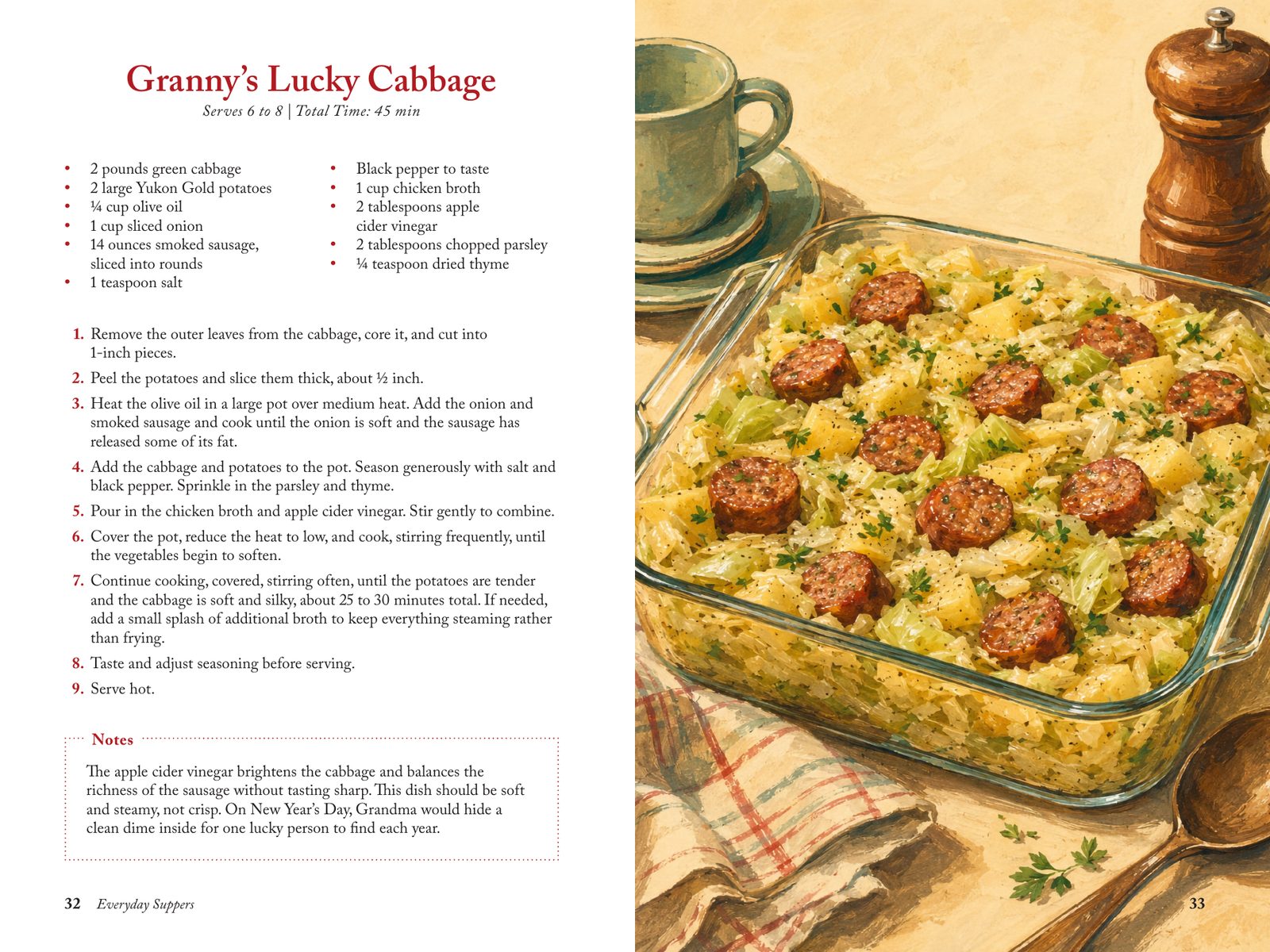
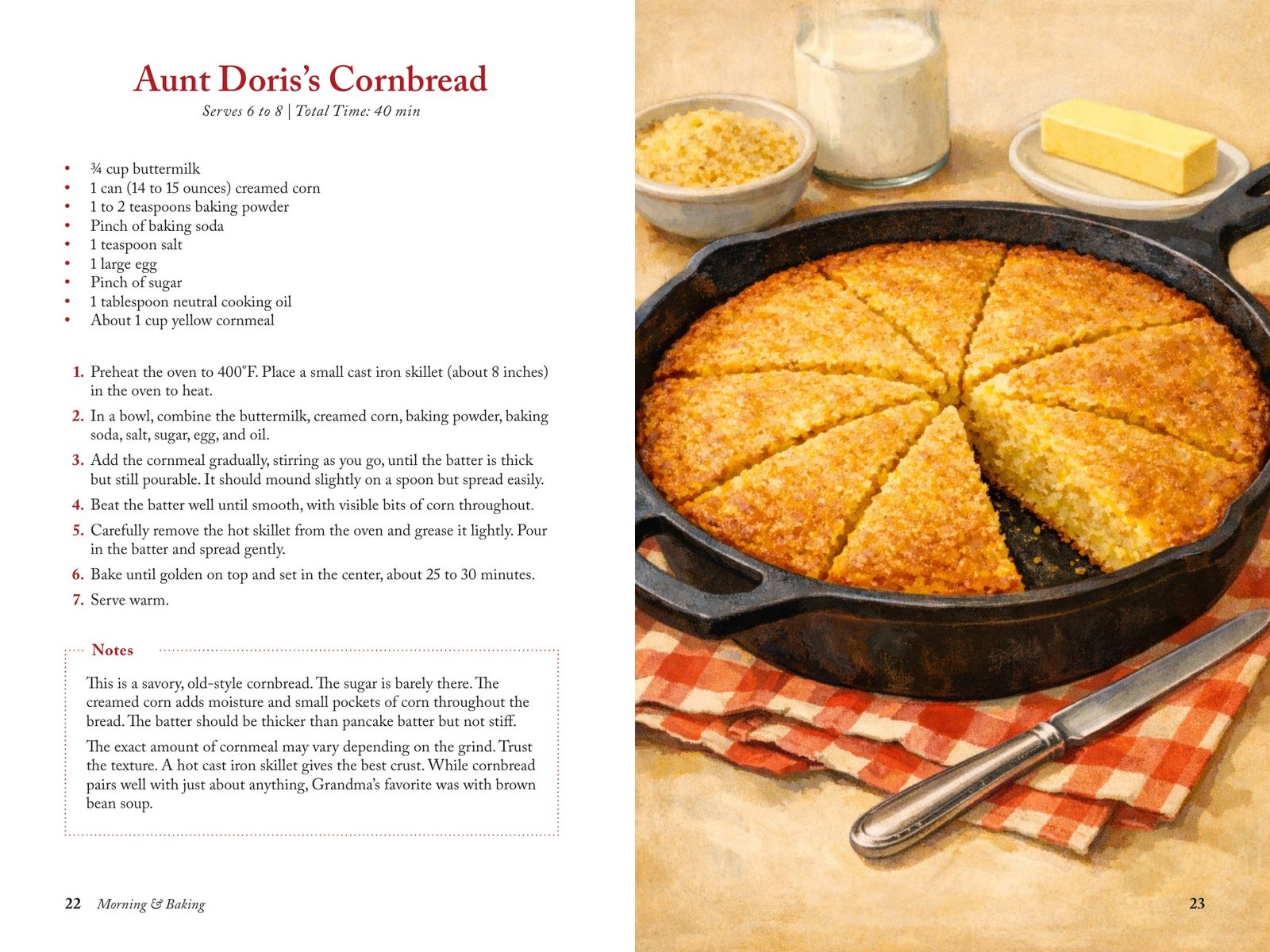
The recipes themselves are written so they work. She cooked in Appalachia in a time when fresh produce wasn’t always easy to find, so the cooking is simple and honest about it. Each recipe gives how many it serves and how long it takes, steps grouped the way you’d actually cook them, and the details that matter. Soak the potatoes. Brown the chops first. Trust the texture of the cornbread batter.
Designed like her table
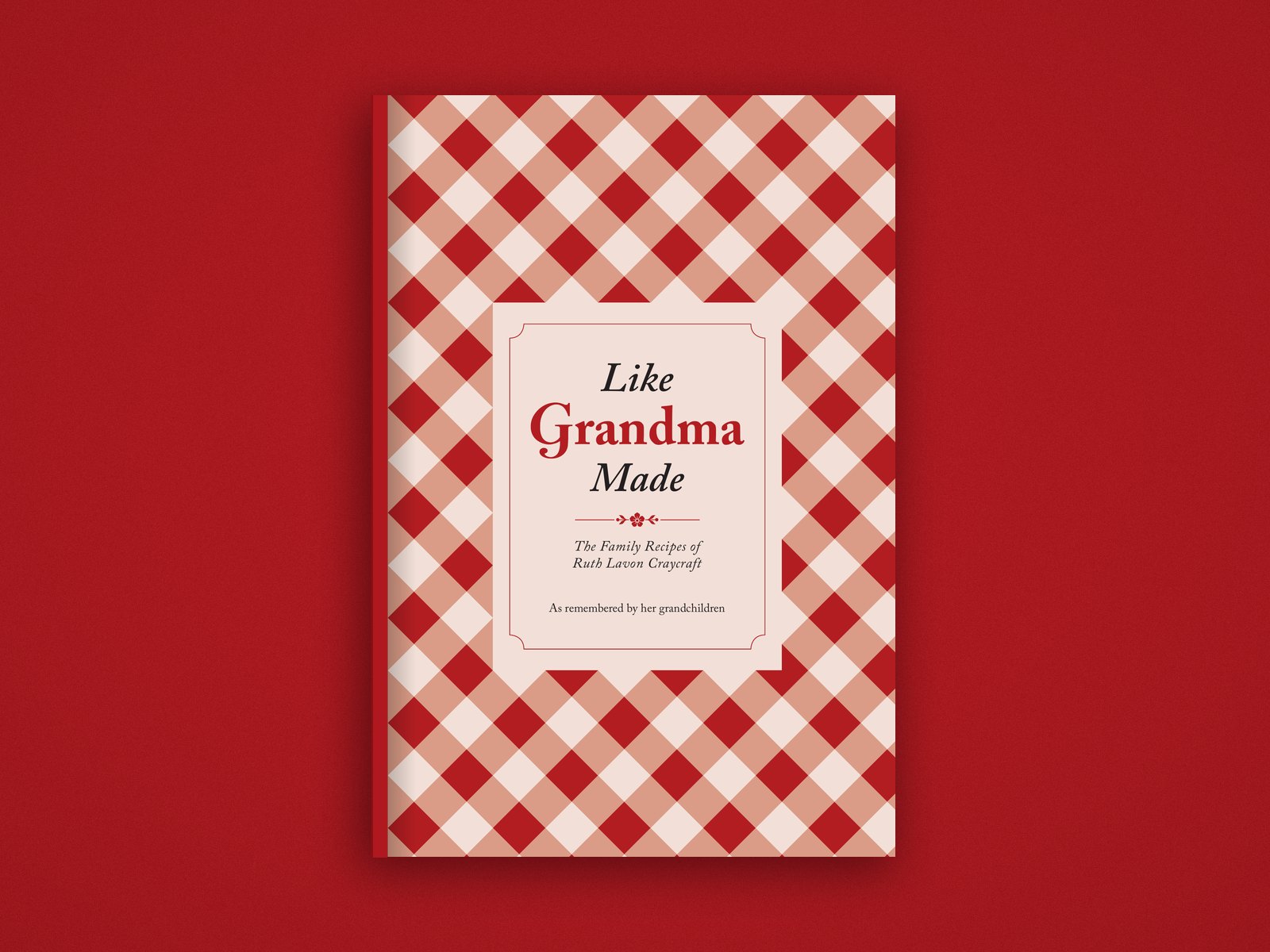
The cover is red gingham, the tablecloth every one of these dishes belongs on, with the title on a cream panel framed like a recipe card. Inside, the type is a warm, bookish serif with red for titles and headings, the same two colors all the way through.
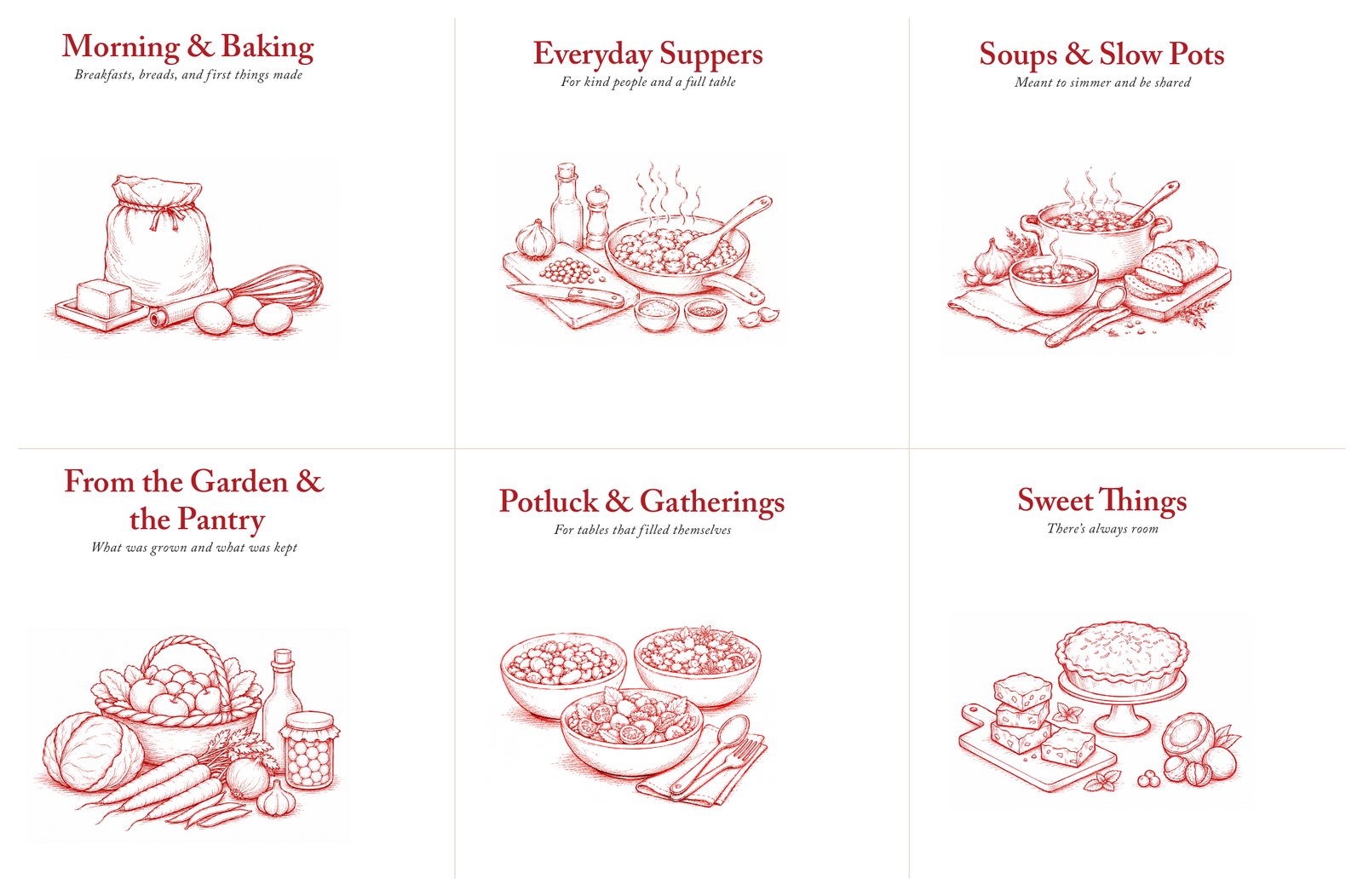
The book is organized like a day of her cooking. Morning & Baking, Everyday Suppers, Soups & Slow Pots, From the Garden & the Pantry, Potluck & Gatherings, Sweet Things. Each section opens with a line drawing in red ink and a short line that sets the mood. Everyday Suppers is “for kind people and a full table.” Potluck & Gatherings is “for tables that filled themselves.” Sweet Things just says “there’s always room.”
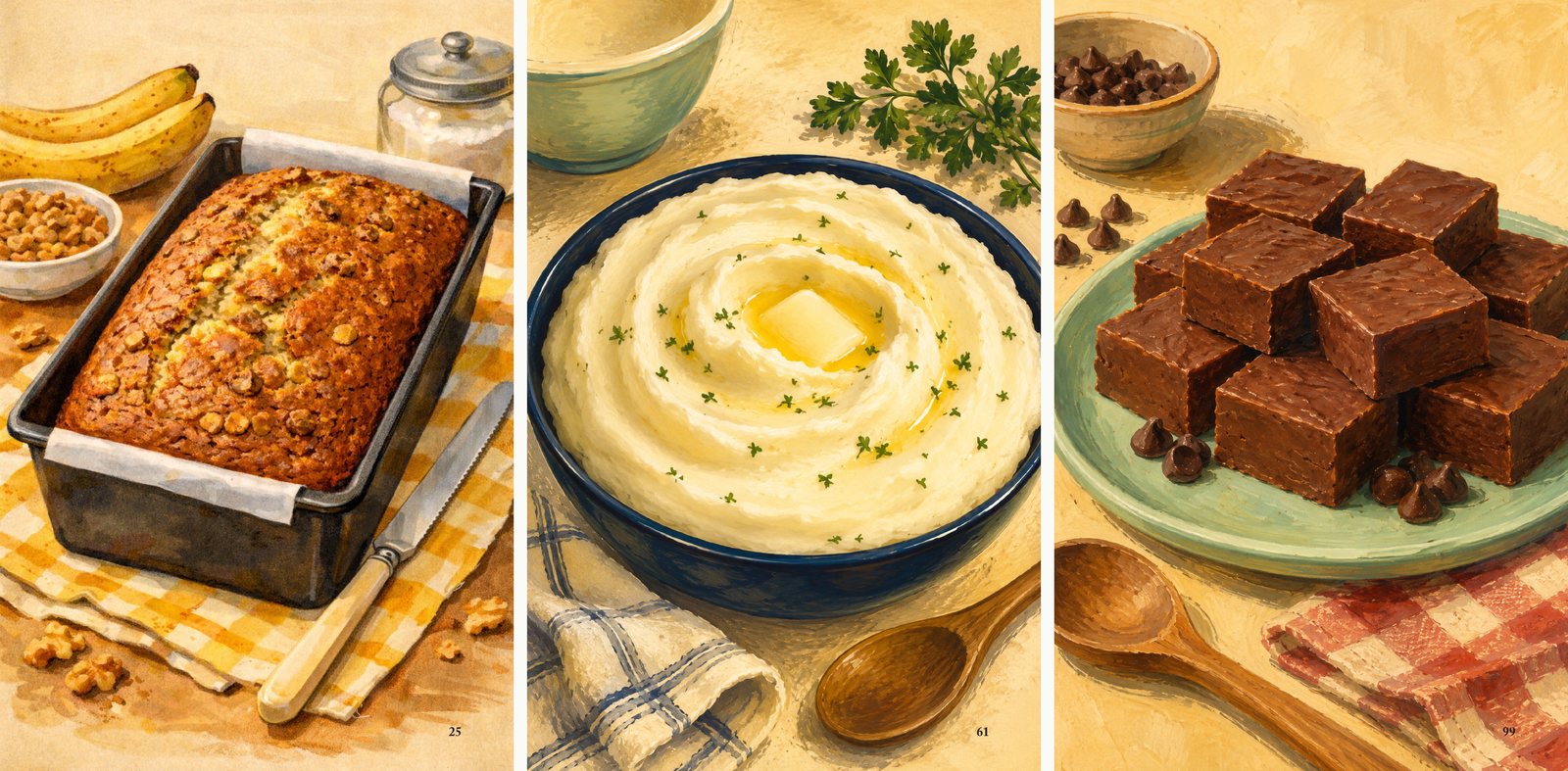
Every dish is illustrated the same way, in warm kitchen light on a checked cloth with a wooden spoon nearby, so the whole book feels like one kitchen. They look like the food she actually served, not food styled for a magazine.
How it ends
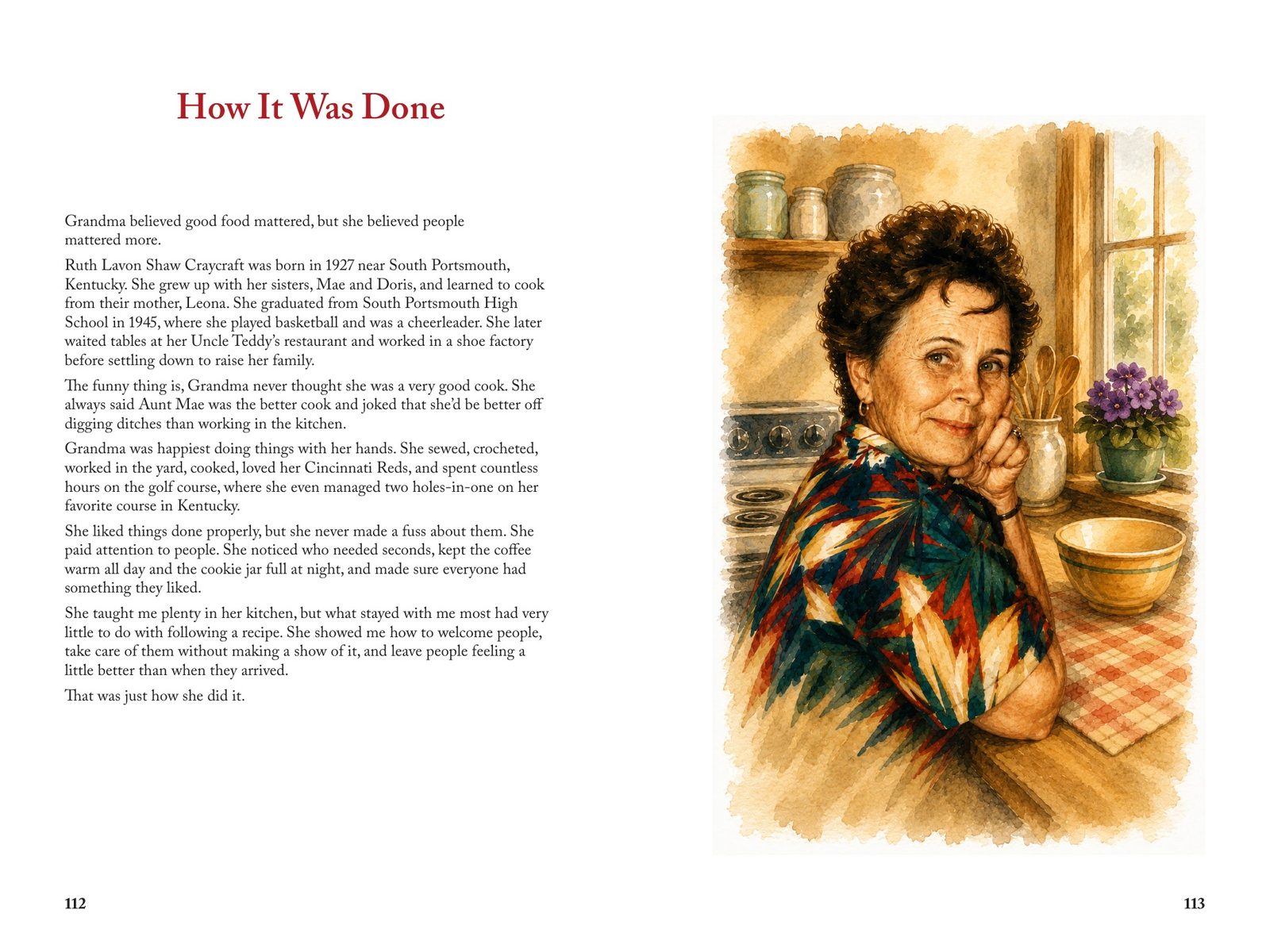
The book opens with two short essays, one about her table and one about how she cooked. It closes with “How It Was Done,” a page about her life beside a portrait of her at her kitchen table. She was born in 1927 near South Portsmouth, Kentucky. She waited tables at her Uncle Teddy’s restaurant, loved her Cincinnati Reds, and once made two holes-in-one on her favorite golf course. She never thought she was a very good cook.
After that come a few blank pages headed “It’s your turn.” Grandma found recipes she loved, made them her own, and shared them with the people she cared about. The book asks the next person to do the same.
She didn’t let many people help in her kitchen, and we were the exceptions. She taught us to peel, dice, fry and bake, then to plate, serve, clear the table and make people feel welcome. As she got older, she let us cook for her. This book is how we keep cooking for each other.
Most of the book came from my own memories. I did a lot of cooking with her, and my sister helped with one of them.
Keep reading

More like this
-
 Making·
Pipeline Health, a grade for the sales pipeline that matches how it feels
A bar in our CRM that forecasts what the pipeline you're looking at will deliver against budget, and names the deals to work on.
Making·
Pipeline Health, a grade for the sales pipeline that matches how it feels
A bar in our CRM that forecasts what the pipeline you're looking at will deliver against budget, and names the deals to work on.
-
 Making·
Can a phone tell where a sugar packet landed?
Yes, if you wrap the packet in foil. How a tabletop game idea turned into a question about touchscreens.
Making·
Can a phone tell where a sugar packet landed?
Yes, if you wrap the packet in foil. How a tabletop game idea turned into a question about touchscreens.
-
 Making·
thoughtbot analytics, one useful suggestion for every page
A side panel on thoughtbot.com that says what's happening with the page you're on and the most valuable thing to improve.
Making·
thoughtbot analytics, one useful suggestion for every page
A side panel on thoughtbot.com that says what's happening with the page you're on and the most valuable thing to improve.