Client Onboarding, learning how a client works before kickoff
A short intake wizard that asks new clients how they like to work, so we can match them with the right people.
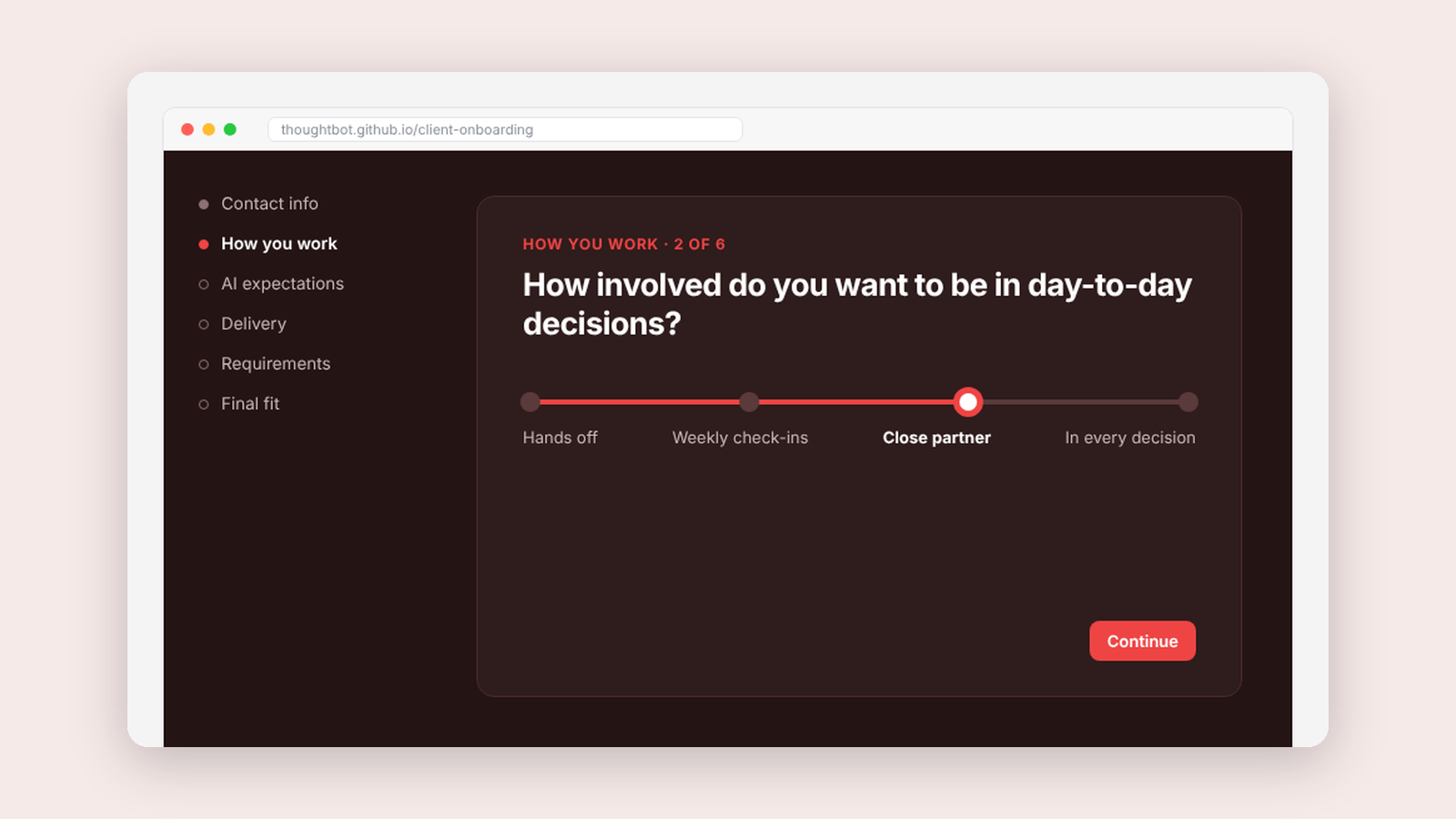
Most of what makes a consulting engagement go well or badly is style rather than skill. How involved the client wants to be in day-to-day decisions. How they feel about AI on their project. Where they land when speed and quality pull against each other. None of that shows up in a statement of work, so we usually learn it in week three.
Client Onboarding asks up front. It's a seven-step wizard written in plain language, covering what made past collaborations work, what didn't, the working style that fits, and what a consultant needs to meet to be a good match.
So far it has delighted clients, mostly because it helps us get the right people on the job the first time.
Small design choices that mattered
- No middle option. The sliders have four stops instead of five, because nearly everyone picked the middle when there was one.
- A bias review on the wording. Options run from neutral to permissive, delivery choices are symmetric, and the list of priorities shuffles for each person so the first option doesn't win by default.
- One submission at the end. Saving every step would have meant messy partial rows and more cost for very little benefit.
Answers land in a spreadsheet rather than a database, so the people doing the matching can read, sort and argue with them without logging into anything new. Each response gets a short AI-written summary of what a consultant should do to succeed with that client.
A kindness to both sides
Asking about working style turns out to be good for everyone. Clients get to say what they need without it feeling like a complaint, and our team walks in already knowing.
Keep reading
More from Tools for my team
-
 Making·
Blog Helper, an editor that knows our style guide
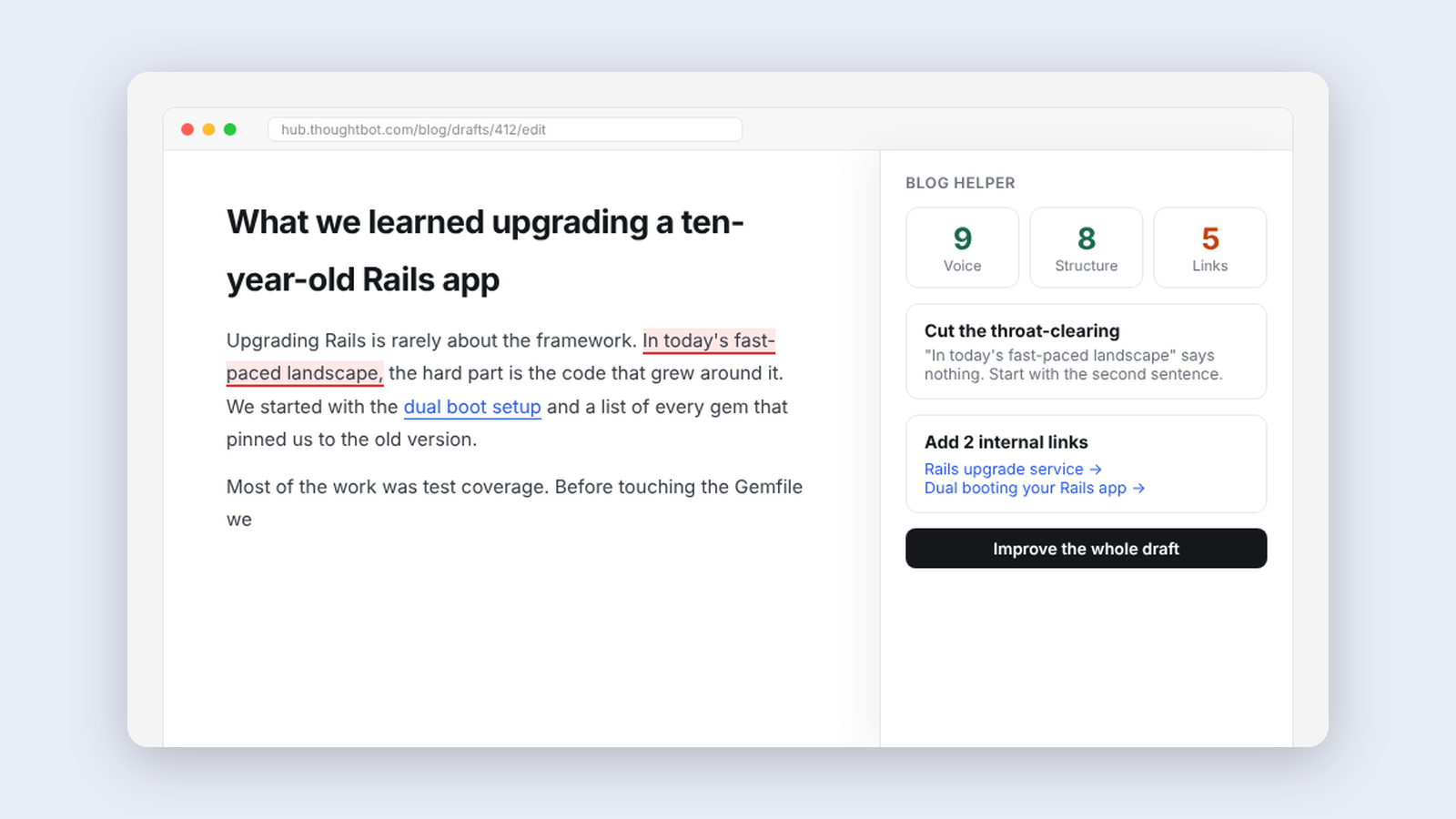
A panel beside our blog editor that reviews drafts against thoughtbot's editorial guidelines, suggests internal links and writes first drafts from notes.
Making·
Blog Helper, an editor that knows our style guide
A panel beside our blog editor that reviews drafts against thoughtbot's editorial guidelines, suggests internal links and writes first drafts from notes.
-
 Making·
Meeting Helper, logging client meetings without thinking about it
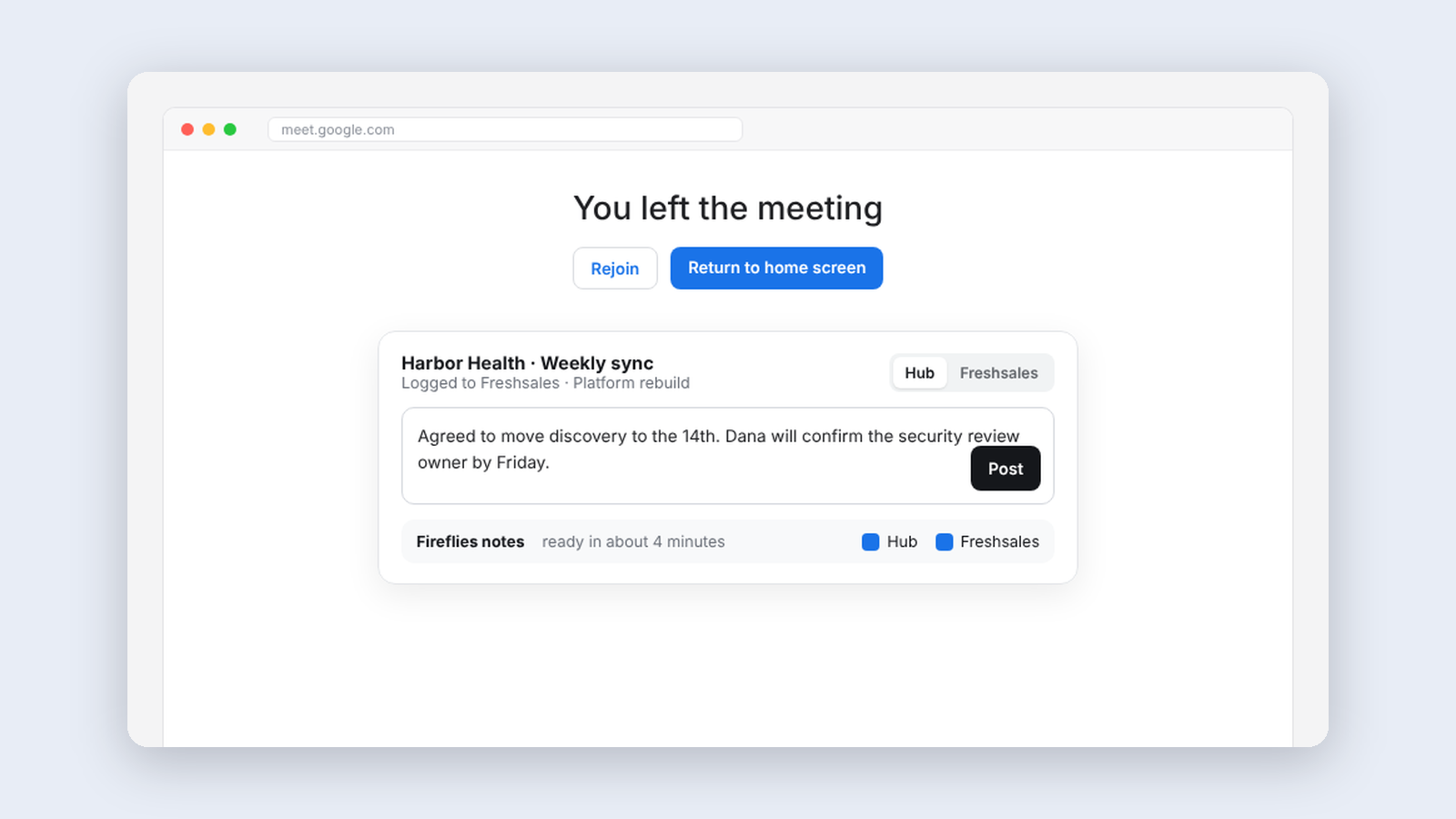
An extension that logs finished meetings to our CRM automatically and handles notes and follow-up right on Google Meet's goodbye screen.
Making·
Meeting Helper, logging client meetings without thinking about it
An extension that logs finished meetings to our CRM automatically and handles notes and follow-up right on Google Meet's goodbye screen.
-
 Making·
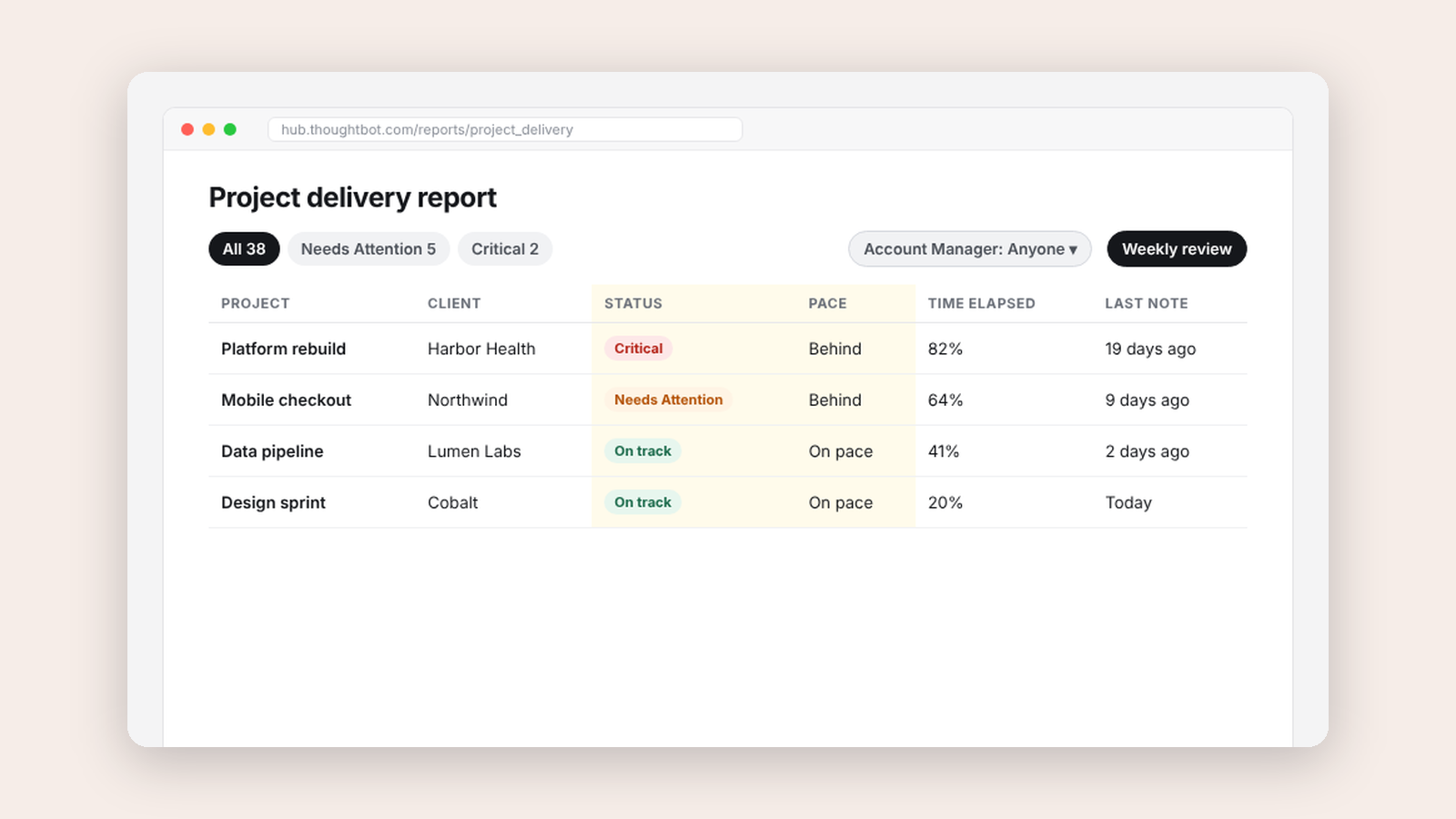
Hub Helper, small fixes for the reports we read every week
Sorting, filters, color bands and a one-click weekly review for the utilization and delivery reports in our internal app.
Making·
Hub Helper, small fixes for the reports we read every week
Sorting, filters, color bands and a one-click weekly review for the utilization and delivery reports in our internal app.