Building tools for my own team
Why I spend some of my week building small tools for the people I work with, and what I've learned from shipping them.
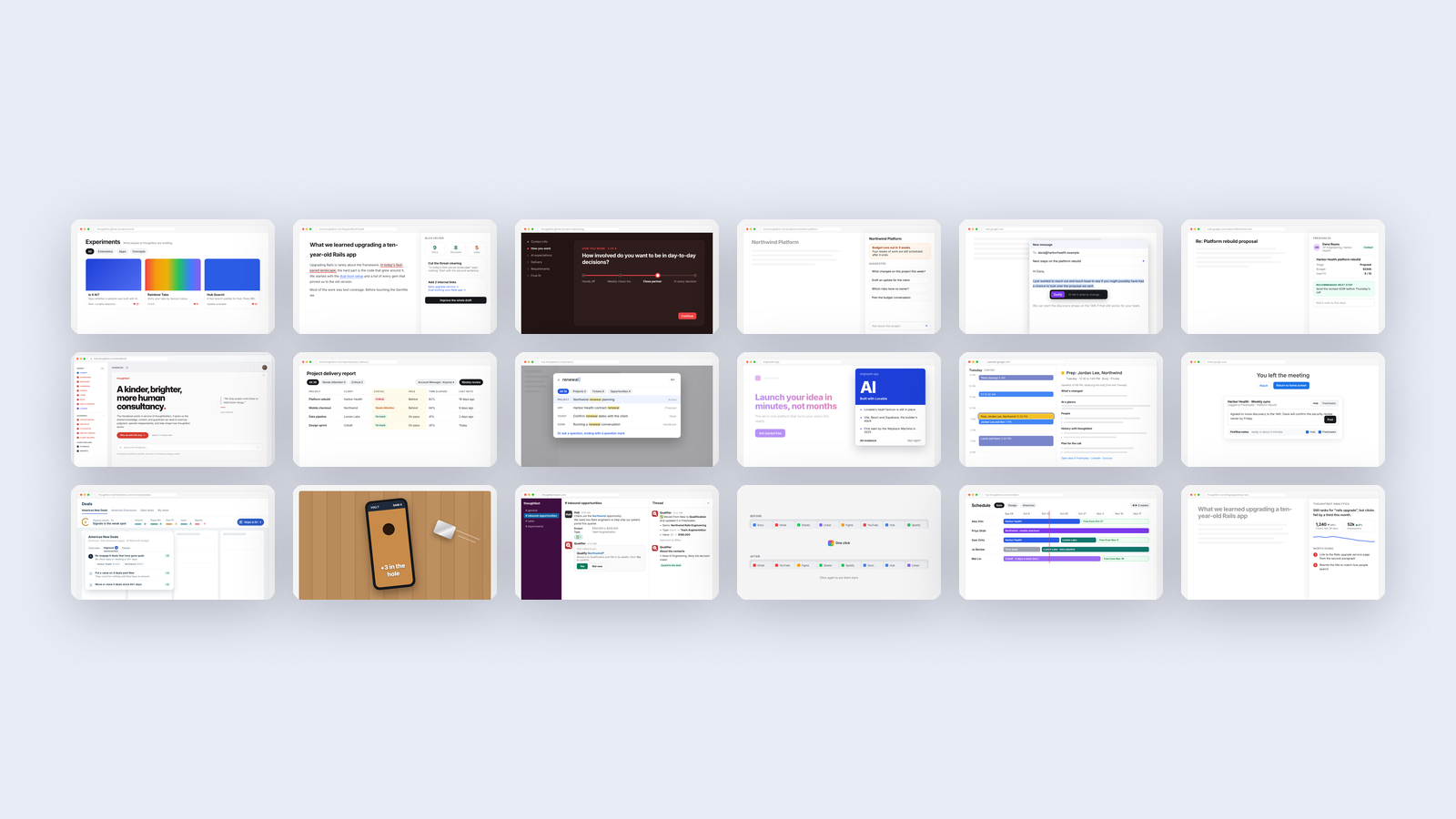
Every tool in this series started the same way. I saw a problem, imagined a solution, and looked for the smallest version of it I could build quickly. That's how I've always worked. What's changed is how small and how quick that version can be.
For the past year a lot of people at thoughtbot have been experimenting with AI on their own. Someone builds a prompt that saves them an hour. Someone else builds a script that fixes an annoying report. Most of it lives in a DM or a personal folder, and the next person starts over.
I wanted to change that, so I started building in the open. Every week I pick something that slows my team down, build a small tool for it, and put it in front of the people it's meant for. Sales, delivery, writing, scheduling, and a couple of toys.
It's about ambition
That's the title of a memo I wrote to the company. None of this is about replacing people or making thoughtbot smaller. AI should raise our ambition. I want us to be 90% better, and by 2027 I want us to be able to tell clients the best new way to build software, because we helped figure it out.
The only way I know to find out what better looks like is to build things, watch whether people use them, and be honest when they don't.
How I run these
Every experiment has the same few rules.
- It solves a problem someone on the team actually has.
- It asks one honest question, like "does anyone click this twice?" or "is the brief good enough that you stop doing your own research?"
- It counts anonymously whether people use it, so the answer comes from behavior rather than politeness.
- It changes nothing until a person says yes.
How I build them
Most of these start as a conversation with ChatGPT, where I work out what the problem really is and what the smallest useful version would look like. Then I build it with Claude Code.
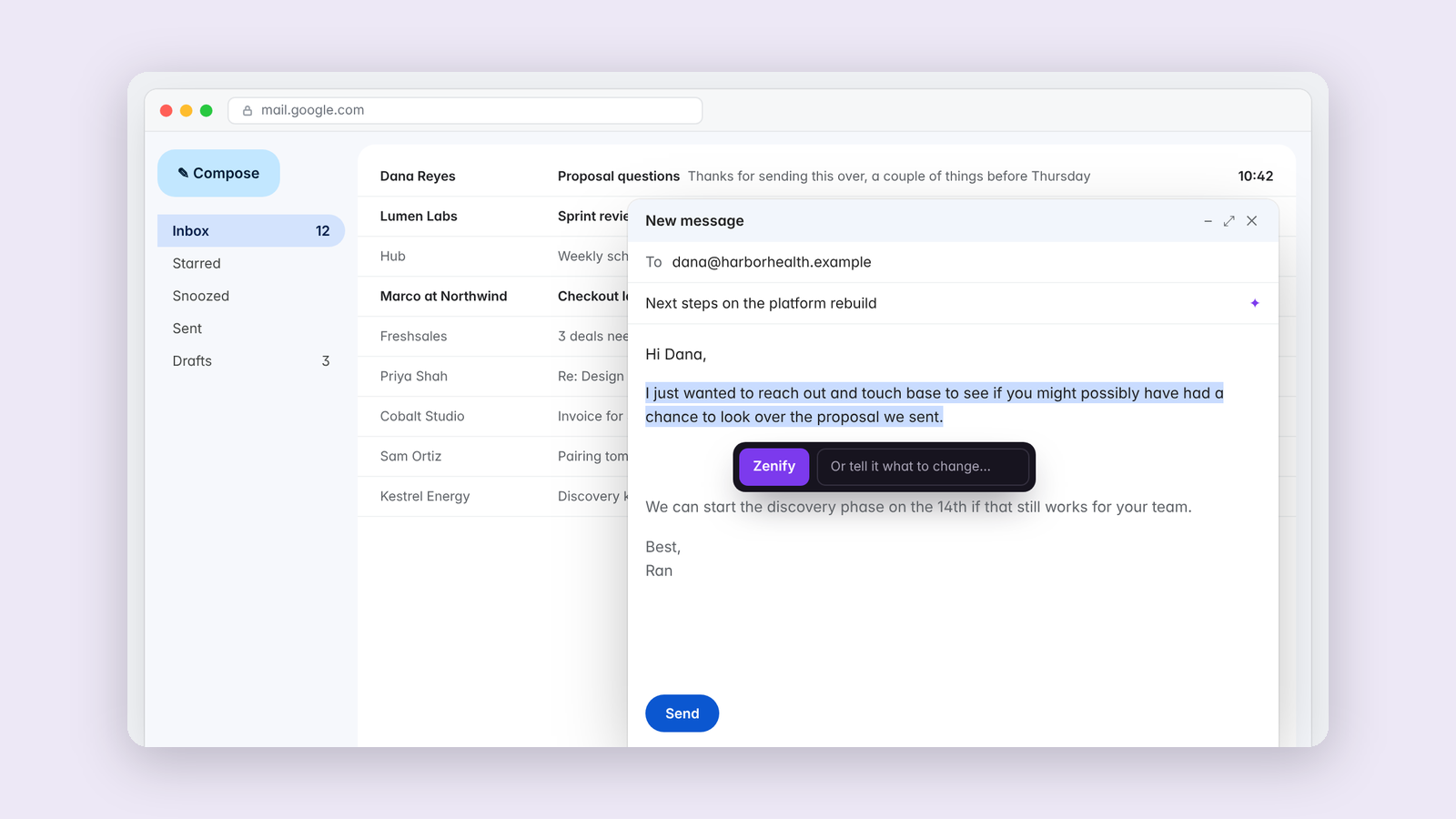
Over a couple of months, the experiments got more ambitious. The first, Email Zenmaster, helps rewrite a few sentences in Gmail. The most recent, Qualifier, is a Slack app that turns a checkmark on an inbound opportunity into an enriched, qualified deal in our CRM, with a brief on the people involved. Each one taught me something that made the next one possible.
Where it stands
Our internal catalog now holds 29 experiments, and dozens of people at thoughtbot are using them. Some are in daily use. Some are probably the wrong shape and will be thrown away. Both outcomes are useful.
The posts in this series are in the order I built them, so you can watch them grow. Each one covers a single experiment, what it does, why I built it, and what it taught me.
The bigger goal is convergence. A year of everyone diverging was the right start. Now the work is turning individual experiments into something the whole company can build on, so that when one person raises the bar, everyone else starts from there.
Keep reading
More from Tools for my team
-
 Making·
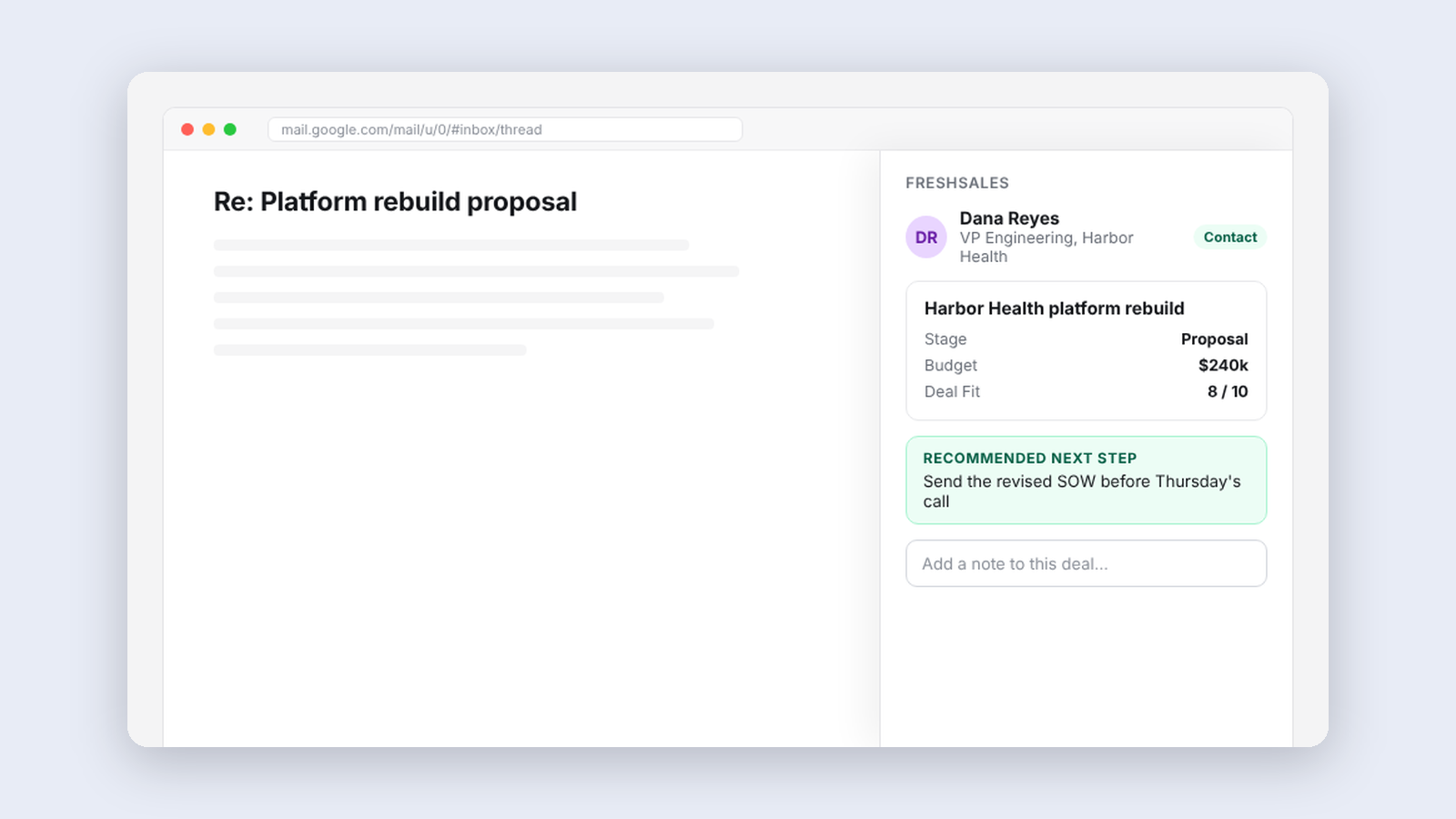
Freshsales for thoughtbot, our CRM inside the inbox
A sidebar in Gmail that shows who someone is in our CRM, the deal tied to a thread, and the people worth reconnecting with this week.
Making·
Freshsales for thoughtbot, our CRM inside the inbox
A sidebar in Gmail that shows who someone is in our CRM, the deal tied to a thread, and the people worth reconnecting with this week.
-
 Making·
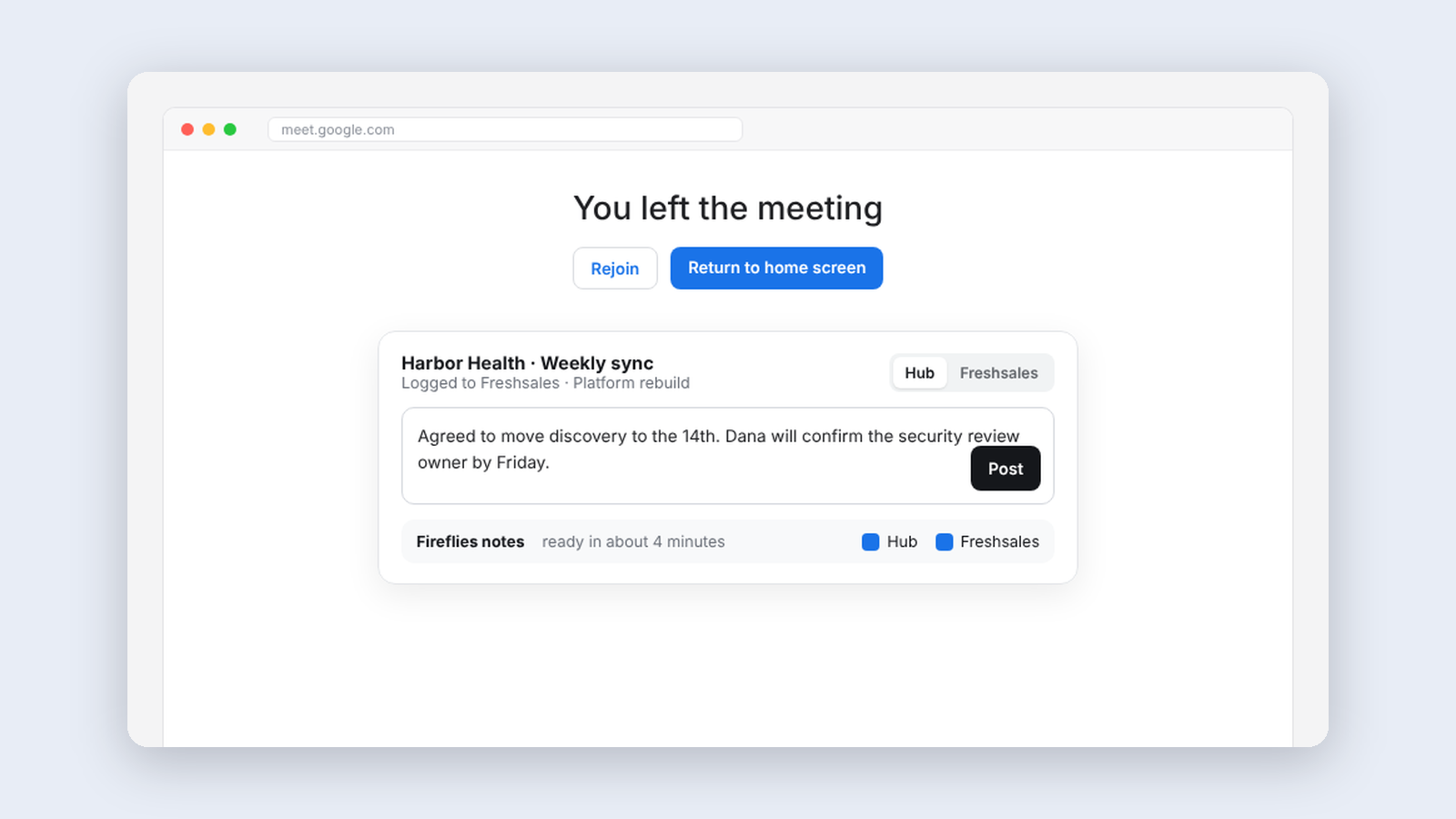
Meeting Helper, logging client meetings without thinking about it
An extension that logs finished meetings to our CRM automatically and handles notes and follow-up right on Google Meet's goodbye screen.
Making·
Meeting Helper, logging client meetings without thinking about it
An extension that logs finished meetings to our CRM automatically and handles notes and follow-up right on Google Meet's goodbye screen.
-
 Making·
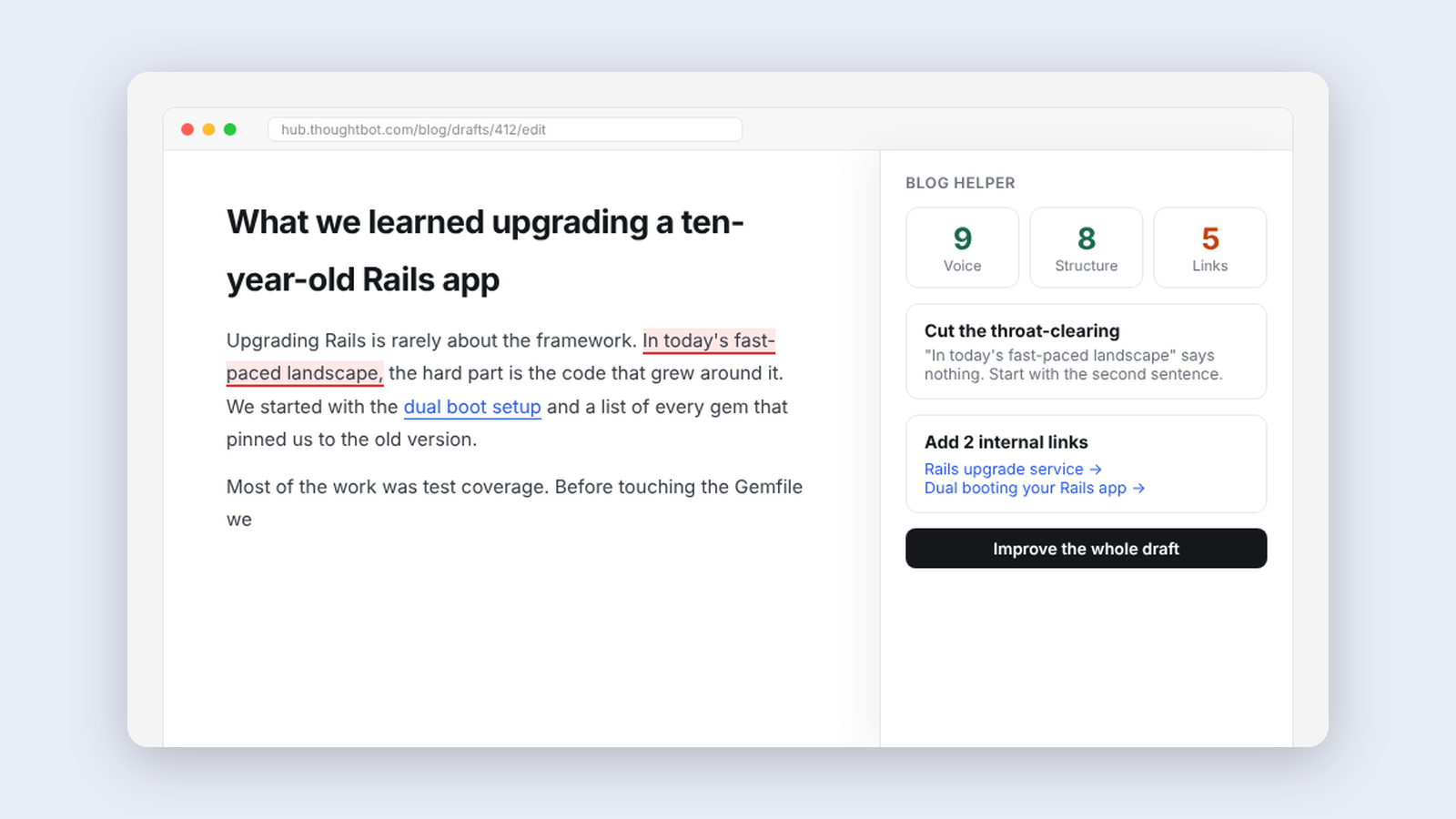
Blog Helper, an editor that knows our style guide
A panel beside our blog editor that reviews drafts against thoughtbot's editorial guidelines, suggests internal links and writes first drafts from notes.
Making·
Blog Helper, an editor that knows our style guide
A panel beside our blog editor that reviews drafts against thoughtbot's editorial guidelines, suggests internal links and writes first drafts from notes.